Hard Hats and Handhelds: A Behind-the-Scenes Look at a Manufacturing Film Shoot
Go behind the scenes of an actual manufacturing video shoot. Learn how professional crews film in loud, dangerous industrial environments while capturing authentic stories.
on November 2, 2025 • 10 Min Read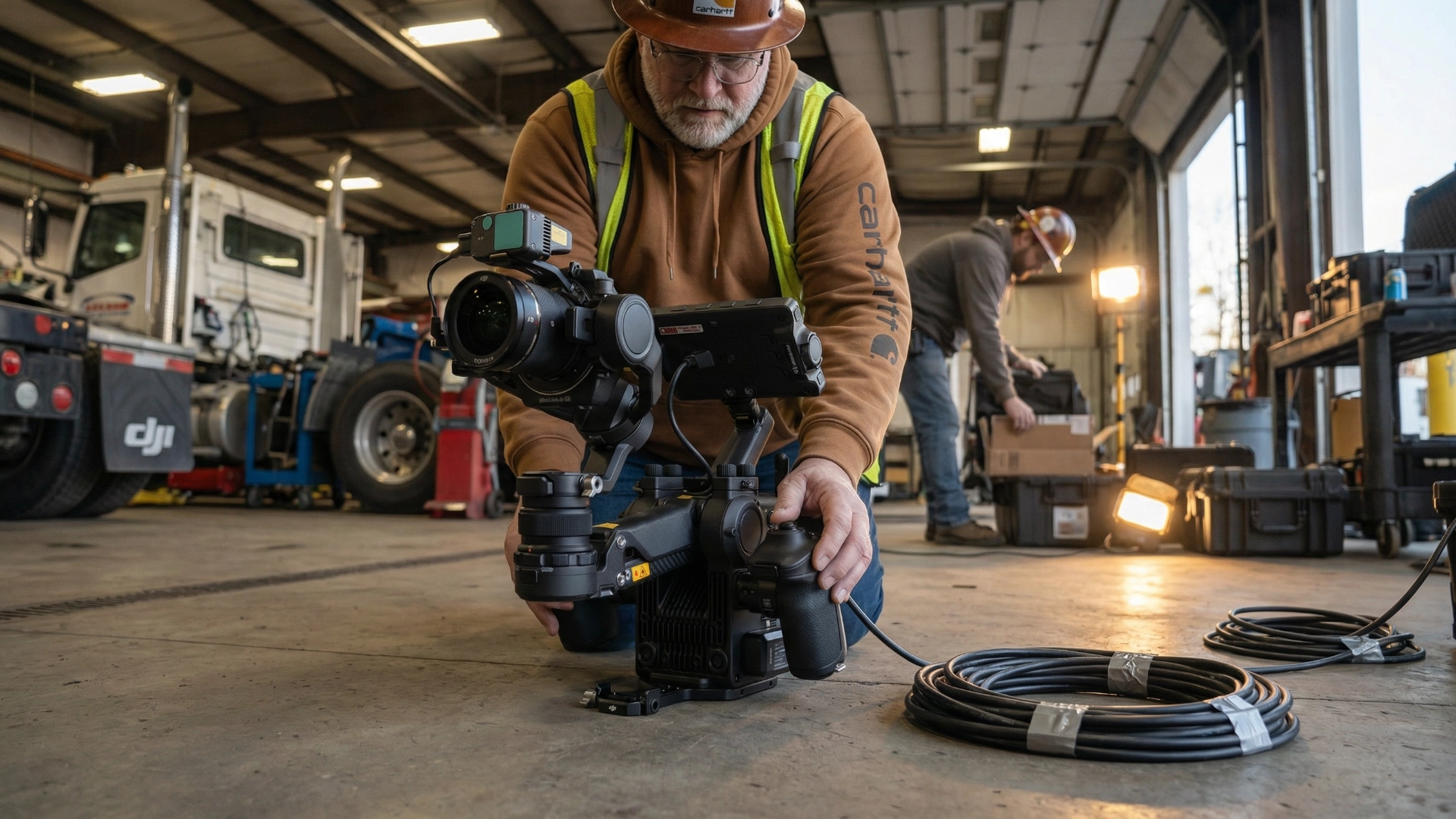
Documentary-style filming in industrial environments—where safety meets storytelling.
5:30 AM at a Lethbridge Manufacturing Facility
The sun isn’t up yet, but the facility has been running for two hours. Third shift ends in 90 minutes, and we need to capture the shift handoff—when outgoing machinists brief their replacements on complex, multi-day projects.
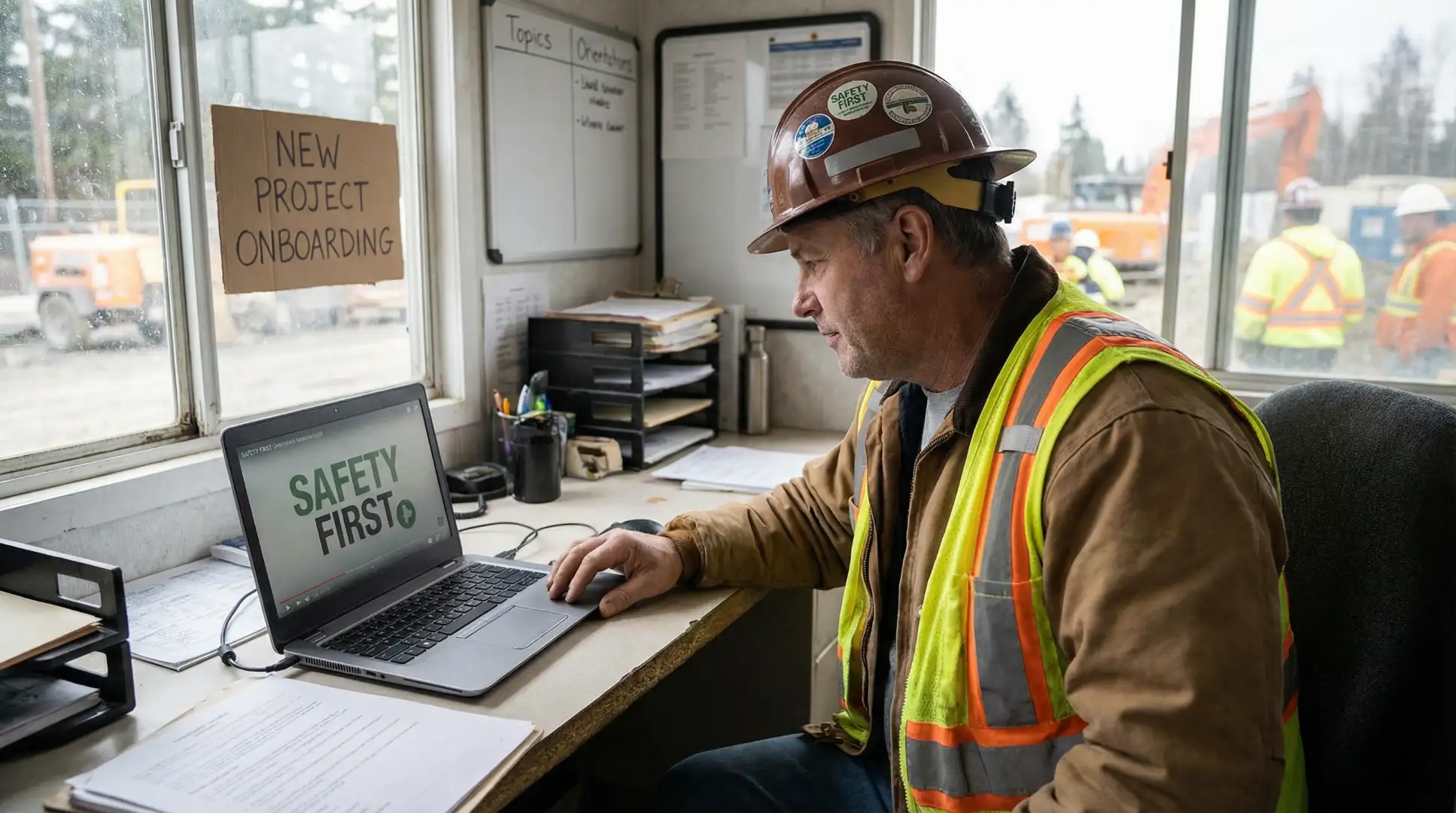
Our crew is geared up: hard hats, safety glasses, steel-toed boots, high-vis vests. We’ve been through a 30-minute safety orientation. Our equipment has been inspected for trip hazards. Our audio engineer wears industrial ear protection over his headphones.
This isn’t a soundstage. This is a working factory floor with CNC machines, overhead cranes, and strict safety protocols. The ambient noise level is 92 decibels. The lighting is harsh fluorescent mixed with bright task lighting. Metal surfaces create unpredictable reflections.
And somewhere in this environment, we need to capture authentic moments that make potential employees think: “That’s where I want to work.”
Welcome to manufacturing video production—where the story meets the reality of where stories actually happen.
Why Manufacturing Video is Different
Most assume it’s just “video production in a different location.” It’s not.
Safety Isn’t Optional—It’s Existential
Before we press record:
- OSHA-compliant PPE for every crew member
- Site-specific safety training (30 minutes to 4 hours)
- Facility permits from safety managers and operations
- Hot work permits for heat-generating lighting
- Emergency evacuation procedures
For one energy client, we spent two full days completing confined space training before filming inside a pressure vessel during maintenance shutdown. Filming: 4 hours. Preparation: 16 hours.
The Environment Doesn’t Care About Your Equipment
We’ve filmed where:
- Noise levels reached 100+ decibels
- Dust from grinding required covering equipment between takes
- Temperature swing from 45°F to 95°F created lens condensation
- Metal shavings on floors meant extra cable care
- Overhead cranes required constant operator communication
Our equipment insurance specifically covers industrial environments. We carry backup cameras. We plan 30% more time than office shoots.
You Can’t Fake Authenticity
The environment that makes filming difficult is exactly what makes content credible.
Viewers can tell the difference between a staged clean factory and real working conditions. The machinery sounds different. The lighting looks different. The employees move differently.
A recruitment video shot in a pristine empty facility will attract people who want pristine empty workplaces. If your environment is loud, active, and gritty—and you want people who thrive there—you need to show the reality.
The challenge: capturing that reality in a visually compelling way rather than chaotic and overwhelming.
That’s where craft matters.
Pre-Production: The Work Before We Arrive
The Site Survey
For any manufacturing project, we conduct at least one site visit beforehand.
We’re assessing:
- Safety: What hazards? What PPE? Restricted areas? Evacuation plans?
- Lighting: Natural light sources? Artificial lighting? Mixed lighting challenges?
- Sound: Ambient noise levels? Periodic spikes? Clean dialogue locations?
- Operations: What happens when? Where are meaningful moments? Space constraints?
- Story: What’s unique and interesting? What would surprise outsiders?
For a precision agriculture equipment manufacturer near Medicine Hat, our survey revealed the most interesting work happened in a 12-foot-wide assembly aisle. We had to completely redesign our approach for that confined space.
The Scheduling Dance
Manufacturing operates on schedules that don’t care about ideal filming.
We work around:
- Production schedules: Can’t stop a $15K/hour line for lighting adjustments
- Shift timing: Key people might work second or third shift
- Seasonal demands: Agriculture manufacturers are slammed during planting/harvest
- Maintenance windows: Sometimes best access is during planned shutdowns
One project required three separate days: two weekdays for active production, one Saturday for maintenance-window equipment close-ups, one evening for second shift veteran interviews.
Finding Your Cast (Who Aren’t Actors)
Our “cast” is actual employees doing actual jobs. They’re not actors. Most have never been on camera. Many are uncomfortable with attention. Some are skeptical.
Our pre-production includes:
- Interviewing potential participants to find articulate, authentic representatives
- Pre-interview conversations to build comfort before cameras appear
- Setting clear expectations about the shoot day
- Explaining why their participation matters
For one manufacturing recruitment project, a 28-year veteran welder initially refused—“I’m not good at talking.” We spent 20 minutes over coffee, just listening to his stories about learning the trade, mentoring apprentices, precision work satisfaction.
By the end, he understood we weren’t asking him to perform—we were asking him to share what he already knew. He became our most compelling interview subject. His segment got 47,000 views and influenced 23 job applications.
The pre-production relationship made that possible.
Shoot Day: What Actually Happens
Hour 1: Safety and Setup (5:30-6:30 AM)
Early arrival, safety manager check-in, sign-in procedures, day’s safety plan review.
While safety briefing happens, our PA does final equipment checks: cameras, lenses, audio recorders, lavalier mics, lighting, batteries, cables, memory cards.
Industrial environments are unforgiving. A failed battery 45 minutes from the nearest rental house can derail an entire day.
Hour 2-3: B-Roll Capture (6:30-8:30 AM)
We start with B-roll—environmental shots and activity footage providing visual support.
Critical technique: We shoot B-roll in sequences, not isolated shots.
Instead of “a shot of a CNC machine,” we capture:
- Wide shot: machine in work area (5-7 sec)
- Medium shot: operator at controls (5-7 sec)
- Close-up: hands adjusting settings (5-7 sec)
- Extreme close-up: cutting tool engaging material (5-7 sec)
- Close-up: finished part being measured (5-7 sec)
- Medium shot: operator inspecting, nodding approval (5-7 sec)
This sequence tells a story: skill → precision → quality. In editing, we can use the full 30 seconds or cut individual shots.
Hour 3-4: The Shift Handoff (8:30-9:30 AM)
The moment we came for—shift handoff where machinists brief replacements.
Two cameras:
- Camera A: Shoulder-mounted, following conversation through workstations
- Camera B: Tripod, capturing wide shots and cutaways
Both machinists wear wireless lavalier mics clipped inside shirts, capturing clean dialogue despite 92dB ambient noise.
The challenge: Authentic conversation without self-consciousness.
Our technique:
- Before: “Follow your normal handoff routine. Forget we’re here. If something goes wrong, just say so.”
- During: Mobile but predictable camera positioning—not directing: “Stand here, say this.”
- After first take: “Great. Let’s do it once more—same routine, but take your time. Camera can wait.”
Second take is almost always better. More comfortable, less camera-aware, more natural.
We capture three takes. In editing, we’ll use moments from all three.
Hour 4-5: Formal Interviews (9:30-10:30 AM)
Interview area in a quieter section—still clearly “on the floor” but away from worst noise.
Our interview technique:
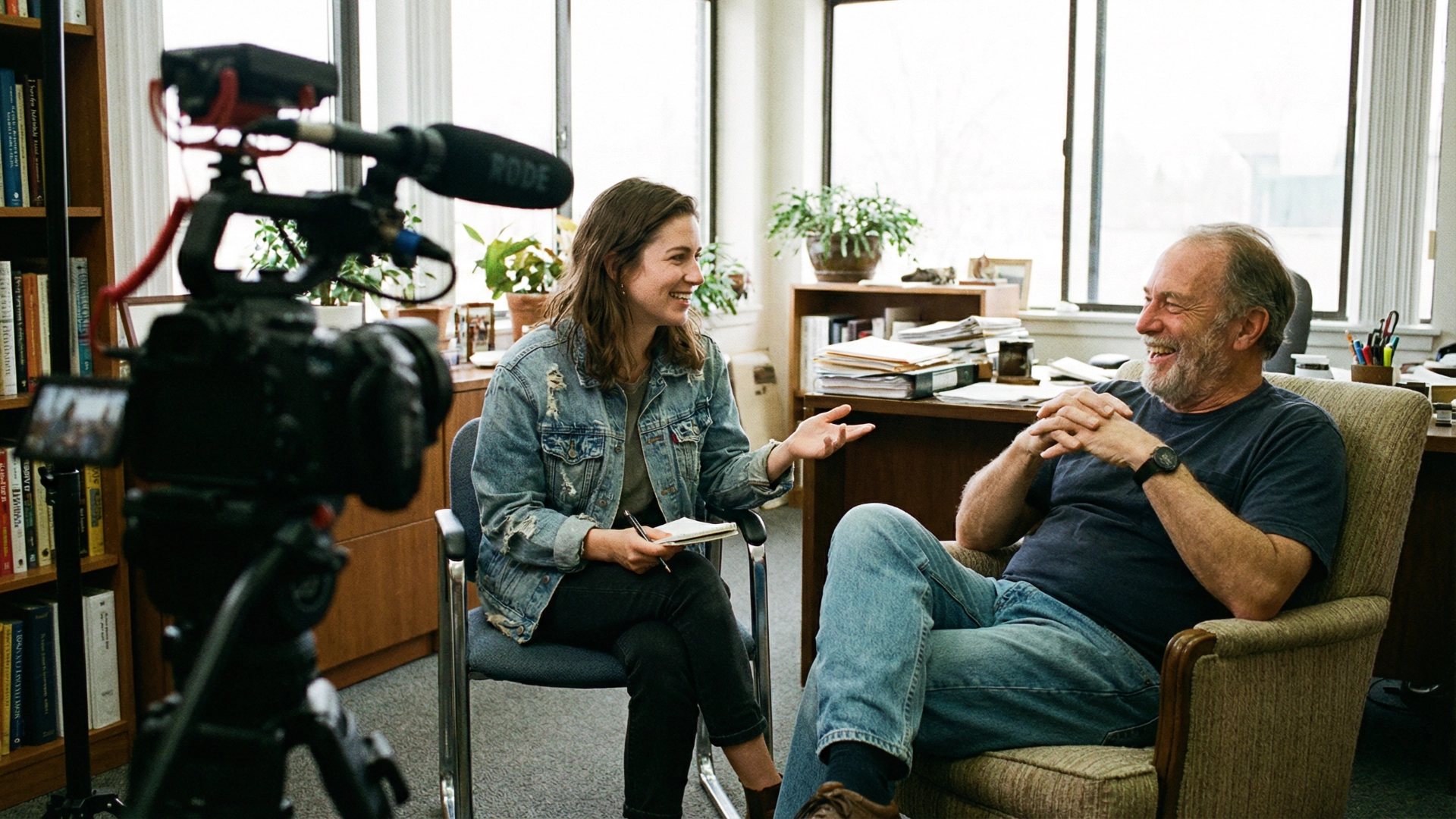
- Conversational, not interrogational: Discussion, not interview. Natural back-and-forth.
- Story-focused questions: “Tell me about a time when…” not “Do you like working here?”
- Permission to pause: “If you need to collect your thoughts, just stop.”
- Active listening: Genuinely interested, which shows in body language and follow-up.
For that veteran welder, the question that unlocked his best content: “What do you wish people understood about welding?”
His answer: “It’s not just melting metal. It’s metallurgy, geometry, understanding how materials behave at different temperatures. Every weld is problem-solving. Young guys think it’s all muscle and sparks—but the best welders can think three steps ahead.”
That 90-second response became the emotional core of the recruitment video. It repositioned welding from “labor” to “skilled craft”—exactly what the client needed.
Hour 5-6: Additional B-Roll and Wrap (10:30-11:30 AM)
With interviews complete, we have narrative clarity. We know what stories we’re telling and what visual support we need.
Final hour captures:
- Specific shots mentioned in interviews
- Details we missed earlier
- Safety moments showing culture
- Human connections (mentorship, teamwork, problem-solving)
We also record room tone—60 seconds of “silence” with normal ambient noise. Essential for audio editing to create smooth transitions.
Before leaving:
- Thank everyone who participated
- Confirm we have all necessary footage
- Return borrowed PPE and sign out
- Debrief with client about next steps
By 11:30 AM, we’re done. Six hours on-site. ~4 hours actual filming. 180 GB of footage across two cameras.
The real work is just beginning.
The Challenges Nobody Warns You About
The Union Consideration
Many facilities have unionized workforces:
- Permission/notification requirements for filming members
- Compensation questions if using employees as on-camera talent
- Script/interview approval processes
- Sensitivity about work portrayal
We now proactively engage union representatives during pre-production, explain our approach, sometimes include union leadership in interviews.
The Proprietary Technology Problem
Manufacturers have proprietary processes that can’t be filmed.
We need to know in writing:
- What can and can’t be shown?
- Who makes that determination?
- What happens if proprietary material accidentally appears?
For one agriculture equipment client, an entire assembly area was off-limits due to next year’s model. We completely redesigned our shot list.
Employee Camera Shyness
Common concerns:
- “What if I say something wrong?”
- “I’m not good at talking.”
- “Why do you need to film me?”
- “What are you really doing with this footage?”
Our approach:
- Transparency: Explain exactly what, who, and how
- Permission to decline: “If you’re not comfortable, that’s fine.”
- Pre-interviews build comfort: By camera time, we’ve already had a conversation
- Show examples: Demonstrate we make people look good, not foolish
One skeptical machinist: “I’ll do this, but if you make me look like an idiot, I’ll be pissed.” When he saw the final cut, he shared it on LinkedIn: “Proud to be part of this team.”
Trust earned.
Why We Share Behind-the-Scenes Content
Our behind-the-scenes content has become one of our most effective marketing tools.
Instagram Stories from factory floors at 5:30 AM, LinkedIn updates about OSHA compliance, TikTok videos showing “planned shot vs what actually happened”—massive engagement.
Why?
- Transparency builds trust: Clients see professionalism, preparation, problem-solving
- It’s inherently interesting: People love “how things are made”—including videos
- It humanizes our brand: We’re craftspeople, not just vendors
- It sets expectations: Prospects arrive better prepared about timelines and requirements
Our most-viewed content last year? A 60-second TikTok showing raw interview clip (awkward pause, stumbled words, background noise) vs final edited version (tight pacing, clean audio, compelling delivery).
That video generated six qualified leads and two signed projects. Production time: 12 minutes.
The Payoff: When the Video Actually Works
That recruitment video featuring the 28-year veteran welder talking about welding as skilled craft?
Three months after launch:
- 23 qualified applications directly attributed to the video
- 65% increase in applications from experienced tradespeople
- 40% reduction in turnover among first-year hires
- 47,000 views across platforms
- Employee pride: current employees shared it widely
Client’s investment: $15,000
Value of 40% turnover reduction: ~$180,000 annually
ROI: 1,200% in year one
That’s what happens when manufacturing video complexity creates something authentic enough to change minds, build pride, and drive measurable outcomes.
It’s why we show up at 5:30 AM wearing hard hats, navigate OSHA compliance, work around production schedules, and invest hours planning for minutes of footage.
When it works—when the story is real enough and compelling enough to change perception—it’s worth every challenge.
Ready to Showcase Your Operations?
Manufacturing video isn’t easy. But when done right by crews who understand industrial environments, safety protocols, and authentic storytelling, it’s one of the most powerful tools for recruitment, brand positioning, and market differentiation.
If you’re a Southern Alberta manufacturer and want to showcase your operations with professionalism and expertise, let’s talk.
We’ve filmed in factories, farms, refineries, and construction sites. We know how to navigate complexities, capture authenticity, and create content that makes your team proud.
Schedule a Discovery Call | View Manufacturing Portfolio
Coalbanks Creative Inc. specializes in video production for industrial environments across Southern Alberta. We believe great manufacturing stories deserve cinematography that matches the craftsmanship we’re showcasing.