Safety, Culture, and Training: Why Internal Video Matters
Marketing isn't the only place for video. Discover how Southern Alberta's top industrial companies use video internally to improve safety culture, standardize training, and connect teams.
on December 20, 2025 • 9 Min Read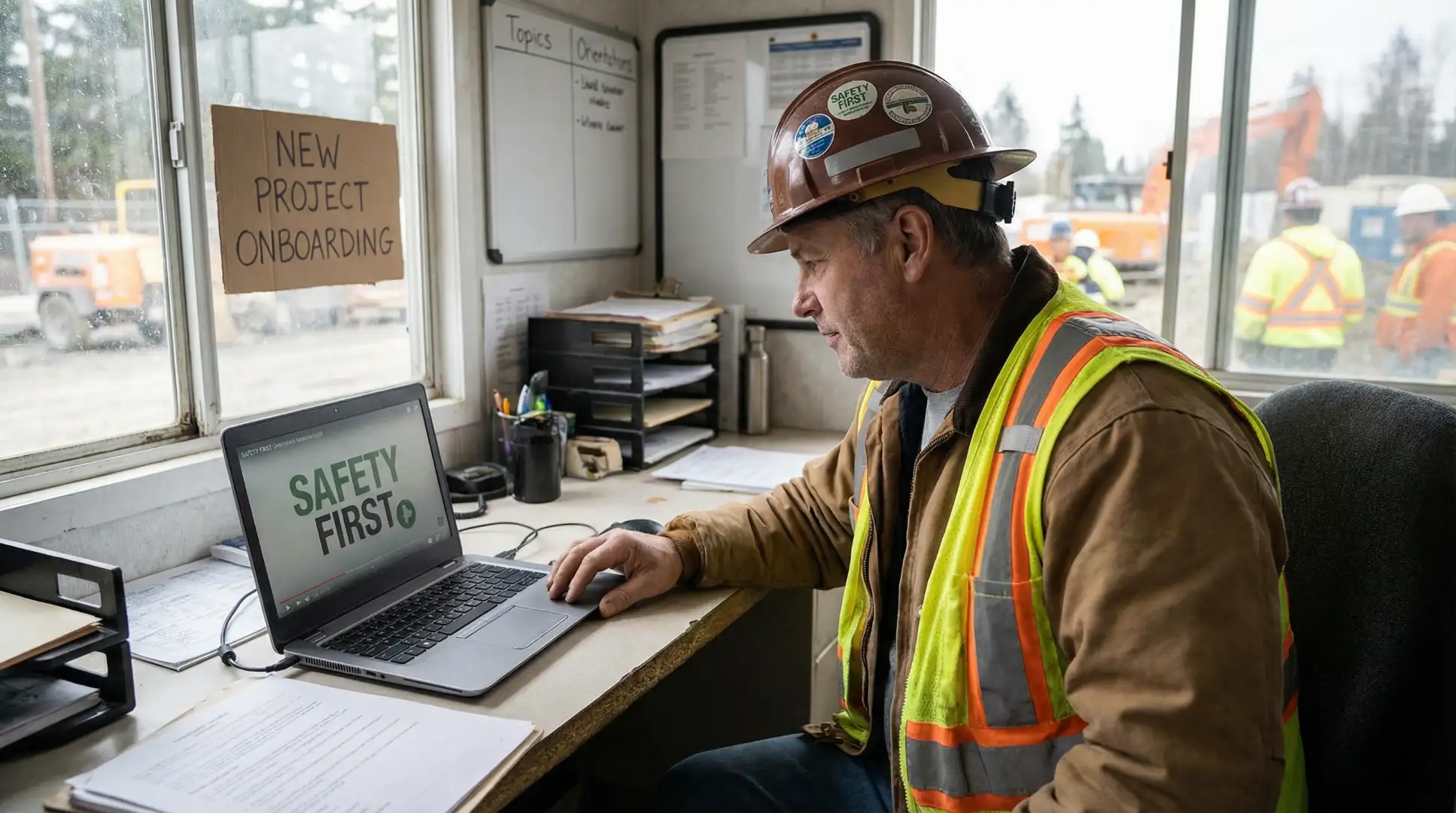
Your most important audience isn’t your customer. It’s your team.
When we talk about “corporate video,” most people think of marketing. They think of commercials, social media clips, and sales tools.
But for our industrial clients—in manufacturing, energy, and agriculture—the most valuable videos we produce often never see the public internet.
They are internal communications. And they are solving expensive operational problems.
The Problem with the Binder
We’ve all seen it: The Safety Binder. Three inches thick. Hundreds of pages of text. Standard Operating Procedures (SOPs) that nobody reads until something goes wrong.
Text is terrible at teaching physical tasks.
You can write three pages describing how to safely lock-out/tag-out a specific machine. Or you can show a 90-second video of an experienced operator doing it correctly.
Which one do you think the new hire remembers at 3 AM?
1. Safety & Orientation
You can’t automate safety culture, but you can standardize it.
We worked with a manufacturing client who was tired of inconsistent safety orientations. Every foreman taught it slightly differently. Important details were skipped on busy days.
We produced a standardized Safety Orientation Film.
- It was shot in their facility, not a stock footage warehouse.
- It featured their safety manager.
- It showed their actual hazards.
The Result: Every single visitor and contractor now gets the exact same, high-quality safety briefing. No steps skipped. Audio-visual retention is higher than text. And the safety manager saves 5 hours a week not giving the same speech on repeat.
Measurable outcomes after 6 months:
- 47% reduction in safety orientation inconsistencies
- Zero incidents during new employee onboarding period
- 5 hours weekly recovered for the safety manager
- $12,000 annual savings on orientation labor costs
The video runs 12 minutes. It covers lockout/tagout procedures, PPE requirements, emergency exits, and hazard-specific protocols. New hires watch it on Day 1. Contractors watch it in the lobby before they enter the facility.
What makes it work:
It’s filmed in their actual facility. Not a generic warehouse. When someone sees the video, they recognize the loading dock, the break room, the specific equipment they’ll operate. That recognition creates retention.
The safety manager appears on camera. Not an actor. Not a narrator. The person they’ll meet in real life explaining real protocols. When they have a question on the floor, they already know who to ask.
2. Training SOPs (Standard Operating Procedures)
Your senior operators have 30 years of “tribal knowledge” in their heads. When they retire, that knowledge walks out the door.
Video creates a knowledge library.
- Filming the “correct” way to perform complex changeovers.
- Documenting the troubleshooting process for common errors.
- Capturing the “tricks of the trade” that aren’t in the manual.
This isn’t just about training—it’s about knowledge transfer. It’s insurance against turnover.
Real example from a precision manufacturing client:
A 32-year veteran machinist was retiring. His specialty? Setting up their most complex CNC mill—a process that took him 6 minutes but confused everyone else for hours.
We filmed him walking through the entire setup. Not a script. Just him explaining his process while doing it. “See this? You always check the offset first. Most people skip that and wonder why their tolerances are off.”
12 minutes of video. Captured three decades of muscle memory and problem-solving.
The ROI:
- Setup time for new operators: 2.5 hours → 15 minutes
- Scrap rate during training: 23% → 4%
- Time to competency: 6 weeks → 2 weeks
- Annual savings from reduced scrap alone: $67,000
That video gets watched by every new machinist. It gets rewatched by experienced operators when they encounter the same issue. It’s been played 247 times in 18 months.
The veteran retired. His knowledge didn’t.
3. Culture & Leadership Connection
In decentralized companies—field crews, remote sites, multiple branches—it’s easy for the “office” to feel disconnected from the “boots on the ground.”
An email from the CEO often gets deleted. A video from the CEO—speaking candidly, looking into the lens, explaining the “why” behind a tough decision—gets watched.
Video humanizes leadership. It closes the gap between the boardroom and the breakroom.
Example: A CEO message that actually landed
A Southern Alberta energy company needed to announce a difficult decision: delaying annual bonuses due to market conditions. The CFO wanted to send an email.
We filmed the CEO instead. Not in his office. In the field, at one of their sites, wearing the same PPE as the crew.
He looked into the camera and explained the numbers. Not corporate speak. Real talk: “Revenue is down 18% this quarter. We have two choices: lay people off or delay bonuses. I’m choosing to keep everyone employed. Here’s the timeline for when bonuses return, and here’s what has to happen first.”
The response:
Instead of anger and rumors, they got understanding. The video was shared internally 340 times. Employees forwarded it to family members explaining why they weren’t getting bonuses—but also explaining why they still had jobs.
Turnover that quarter: 2% (industry average during downturns: 12-15%)
Why it worked:
The CEO showed up in their environment. He respected them enough to explain the truth. And video let them see his face, hear the concern in his voice, and understand the decision wasn’t made lightly.
An email would have sparked resentment. The video sparked loyalty.
The Secret to Internal Video: It Doesn’t Need to Be “Cinema”
Marketing videos need polish. They represent your brand to the world.
Internal videos need clarity.
- The lighting doesn’t need to be dramatic.
- The music doesn’t need to be epic.
- The audio does need to be crisp.
- The information does need to be accurate.
This often means internal video production is faster and more cost-effective than marketing collateral. It’s a utility tool, not a vanity project.
What Internal Video Actually Costs
Let’s talk numbers. Because internal video has a completely different cost structure than marketing content.
Safety orientation video (10-15 minutes):
- Production: $3,500-$5,000
- One-time cost
- ROI: Immediate (eliminates repeated in-person orientations)
- Payback period: 3-6 months
SOP training library (5-8 videos, 5-10 minutes each):
- Production: $8,000-$12,000
- One-time cost
- ROI: Reduced training time, lower turnover costs
- Payback period: 8-12 months
Leadership communication (quarterly updates, 3-5 minutes each):
- Setup cost: $2,500 (one-time for equipment/template)
- Per-video cost: $800-$1,200 (recurring)
- ROI: Employee engagement, culture retention
- Payback period: Measured in retention, not direct dollars
Compare this to the cost of NOT having video:
- Safety incident due to unclear procedures: $50,000-$500,000 (OSHA fines, lost time, insurance)
- Knowledge loss when senior employee retires: 6-12 months productivity loss for replacement
- Poor communication leading to turnover: $15,000-$25,000 per employee replacement cost
A $5,000 video that prevents one safety incident pays for itself 10x over.
The 3 Most Common Mistakes
Mistake 1: Overproduction
You don’t need cinema cameras for safety training. You need clear visuals and crisp audio.
We’ve seen companies spend $25,000 on a beautifully lit, perfectly composed safety video that their employees hate because it feels fake. They filmed in a studio. The equipment didn’t match what’s on their floor. The “operator” was an actor who’d never run that machine.
Better approach: Shoot in your actual facility. Feature your actual people. Use professional equipment, but prioritize authenticity over aesthetics.
Mistake 2: No Update Strategy
You film a great onboarding video. Then your facility changes. New equipment arrives. Procedures update. The video becomes outdated—and worse, misleading.
Better approach: Build update cycles into your planning. Budget for annual reviews and quick re-shoots when procedures change. A 90-second update clip costs $800-$1,200. Much cheaper than maintaining inaccurate training.
Mistake 3: Treating Video Like a Project, Not a System
One-off videos have limited impact. A library of interconnected training videos creates compounding value.
Better approach: Start with your highest-impact use case (usually safety), then build your library systematically. Each video reinforces the others.
Invest in Your Operations
If you’re looking at your marketing budget and thinking “we’re good for now,” look at your operations budget.
Where are you losing money to inefficiency? To turnover? To retraining? To safety incidents?
A camera might be the best industrial tool you haven’t bought yet.
Your Internal Video Priority List
Not sure where to start? Here’s the priority order we recommend for Southern Alberta industrial companies:
Priority 1: Safety Orientation
Why first: Legal compliance, immediate ROI, reduces liability Investment: $3,500-$5,000 Timeline: 2-3 weeks production Payback: 3-6 months
Priority 2: Critical SOPs
Why second: Captures irreplaceable knowledge before retirement Investment: $1,500-$2,500 per SOP video Timeline: 1-2 weeks per video Payback: 8-12 months
Priority 3: Onboarding/Culture
Why third: Reduces turnover, improves new hire integration Investment: $4,000-$7,000 for comprehensive package Timeline: 3-4 weeks production Payback: 12-18 months (measured in retention)
Priority 4: Leadership Communications
Why fourth: Builds engagement after foundation is solid Investment: $2,500 setup + $800-$1,200 per message Timeline: 1 week setup, ongoing production Payback: Measured in culture metrics
How to Get Started
Week 1: Identify Your Highest-Cost Problem
What’s costing you the most right now?
- Inconsistent safety training → Start with safety orientation
- Knowledge walking out the door → Start with SOP documentation
- Poor communication causing turnover → Start with leadership messaging
- Long training timelines → Start with skills training library
Week 2: Document Current Process
Before you film, write down your current approach. What gets taught? In what order? Who teaches it? This becomes your video script outline.
Week 3: Choose Your Production Approach
You have two options:
-
DIY with guidance ($500-$2,000 equipment investment)
- Best for: Ongoing documentation needs, regular updates
- Challenge: Learning curve, time commitment
- ROI: Lower per-video cost long-term
-
Professional production ($3,500-$12,000 per project)
- Best for: Critical safety content, knowledge capture, polished culture videos
- Advantage: Faster, higher quality, one-time effort
- ROI: Immediate impact, no learning curve
Week 4: Film and Deploy
Whether DIY or professional, the goal is the same: clear, accurate, useful content your team will actually watch.
The Bottom Line
Your employees are your most important audience. They’re also the most expensive to replace.
Internal video isn’t glamorous. It won’t win awards. It won’t go viral.
But it will save you money, transfer knowledge, improve safety, and keep your best people longer.
That’s a better ROI than most marketing videos will ever deliver.
Want to improve your internal communications? Let’s discuss how video can support your safety and training goals.